
YEAR: 1830Indian Removal Act and Trail of Tears
The Indian Removal Act of 1830 was the codification of Andrew Jackson’s life work — the ethnic cleansing of the southeastern United States.
The act authorized the forced expulsion of the Cherokee, Creek, Choctaw, Chickasaw, and Seminole nations from their ancestral lands to make way for the rapid expansion of cotton plantations and industrial-scale slavery. The Cherokee in particular attempted a legal resistance and despite the Supreme Court establishing a precedent for Cherokee sovereignty in Worcester v. Georgia (1832), the ruling was ignored by Andrew Jackson.
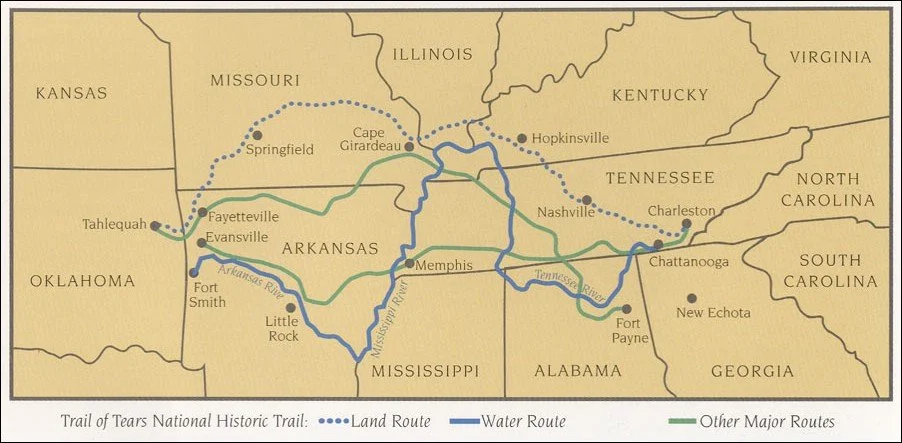
The 1838 forced march west of 16,000 Cherokee men, women, and children in which thousands died from disease and exposure is known as the Trail of Tears. This episode lays bare the fundamental basis of U.S. capitalism.
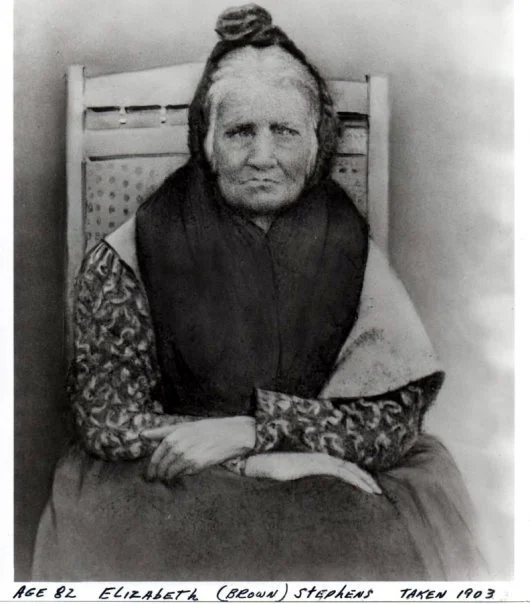
Elizabeth "Betsy" Brown Stephens (1903), a Cherokee woman who walked the Trail of Tears in 1838